
Explainer: The US is attempting to force regime change in Venezuela
Here's what you need to know.

This is a complex and evolving story, but we’ve tried to break down some of the basics on what is happening and how it stands under international law. There are mixed feelings amongst the Venezuelan community, with many rightfully glad to see the end of an oppressive dictator, others fearing the outcome of further US interference (and both can be true at once), so we encourage everyone to listen to their perspectives.
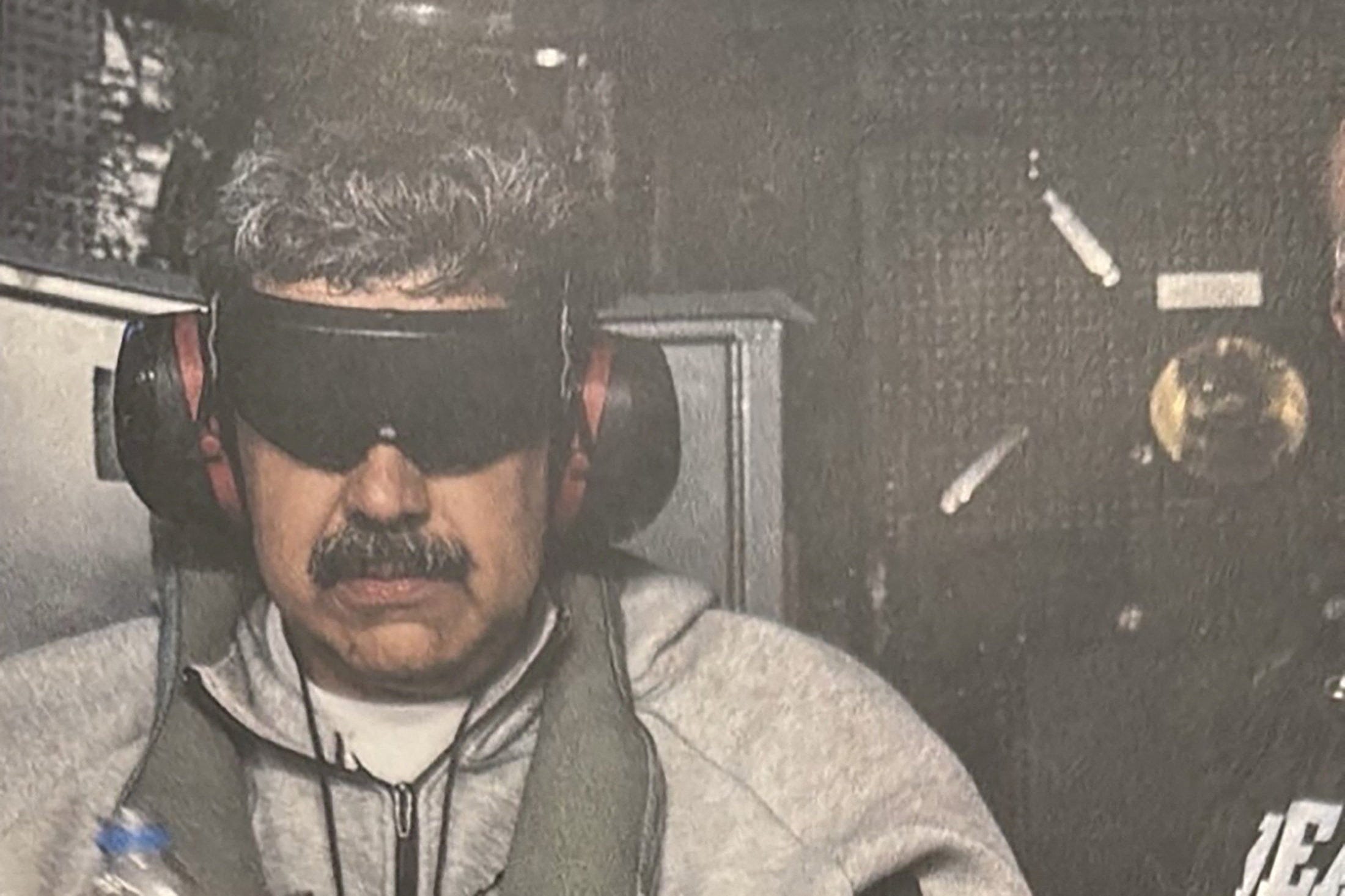
In the early hours of Saturday morning, the US carried out a major strike against Venezuela, during which the country’s leader, Nicolas Maduro, and his wife, Cilia Flores, were abducted and transported to New York to face federal narco-terrorism charges. The attack saw bombs dropped on multiple strategic and military targets across the Venezuelan capital of Caracas, with at least 80 people killed, including a large part of Maduro’s security team.
Maduro, along with his wife, son, and several of his alleged co-conspirators, has been indicted on accusations of corruption and drug trafficking. The indictment focuses on the use of government power to illegally transport thousands of tons of cocaine into the US, alleging Maduro is the defacto leader of the Cartel de los Soles.
In the wake of Maduro’s abduction, US President Donald Trump claimed that the US would “run” Venezuela until a “proper” transition of power could occur. Initially, it seemed likely that the US government would back opposition leader and 2025 Nobel Peace Prize winner María Corina Machado to take the leadership, but Trump has since suggested she did not have sufficient support or respect among the Venezuelan people.
Regardless of US plans, Maduro’s allies have so far remained in charge, with vice president Delcy Rodríguez sworn in as interim leader on Sunday.
Rodríguez has publicly declared the country would refuse to become “a colony of an empire”, contradicting claims made by Trump suggesting the Venezuelan government was willing to cooperate with the US.
How did we get here?
Trump has been paving the way for this attack since his inauguration, rapidly shifting the response to drug overdose deaths in the US from one focused on public health to one of military aggression.
On January 20, he signed an executive order enabling criminal organisations to be listed as “foreign terrorist organisations”, later formally designating eight groups, including Venezuelan gang Tren de Aragua. US intelligence agencies have disputed claims made by Trump that Maduro’s government was working with Tren de Aragua to orchestrate drug trafficking and illegal immigration.
But the US President has been an outspoken critic of Maduro since his first term, when the US government first charged the Venezuelan president with corruption and drug trafficking. Under Trump’s leadership, the US introduced harsh economic and oil sanctions against Venezuela in an attempt to strangle the economy and oust Maduro from the leadership - a strategy that sought to make conditions within the country so dire that the citizens would rise up against him. Research conducted by the Center for Economic and Policy Research in Washington estimated that US sanctions was the cause of around 40,000 deaths between 2017 and 2018 alone, with the authors arguing that the harm inflicted met the definition of collective punishment of a civilian population as described in both the Geneva and Hague international conventions.
In August, Trump doubled down on intentions to oust the Venezuelan leader, doubling the reward for information leading to Maduro’s arrest to US$50 million.
On September 2, the US military made its first strike on a Venezuelan vessel that Trump claimed Tren de Aragua was using to traffic drugs. A systemic campaign of attacks followed, with the US having struck at least 35 vessels in South American waters, killing at least 115 people to date.
Critically, the US is yet to provide credible evidence to justify the attacks, with human rights groups having condemned them as illegal killings of civilians, while legal experts suggest the strikes are a likely breach of international law.
On October 2, Trump declared drug cartels were unlawful combatants that the US was in “armed conflict” with, in an extraordinary attempt to justify his administration’s illegal actions.
Meanwhile, the US had been ramping up its military presence in the region to the highest levels since the 1962 Cuban Missile Crisis. Approximately 15,000 personnel were deployed to he region along with the world’s largest aircraft carrier, and Trump announced he had authorised the CIA to conduct covert operations inside Venezuela.
By November further escalation seemed inevitable, with Senate Republicans voting down legislation that would have limited Trump’s ability to order an attack on Venezuelan soil without the authorisation of Congress - essentially making it easier for Trump to make unilateral calls.
In response to the growing US military presence, Maduro mobilised 200,000 national military members and called on the country’s civilian militia, the Bolivarian Militia, to take up arms in the event of an attack.
Things ramped up further on December 10, when the US illegally seized an oil tanker it alleged was involved in an “illicit oil supply network” - the Venezuelan government labelled it as “blatant theft and international piracy”.
By December 16, Trump had ordered a blockade of sanctioned oil tankers going in and out of the country, in an apparent attempt to squeeze the country’s oil-dependent economy. By the end of the month, Trump had sanctioned four companies in Venezuela’s oil sector.
On December 30, the CIA orchestrated a drone strike on a docking area alleged to be used by Venezuelan drug cartels, marking the first known attack on Venezuelan soil since the strikes began.
In a state television interview aired two days before his kidnapping, Maduro said he was open to negotiating an agreement with Trump to combat drug trafficking, but maintained that the US strikes were about forcing regime change in Venezuela and accessing the country’s oil assets.
Is this really about drugs?
The Trump administration has become increasingly lax about convincing the international community that its campaign against Maduro is about anything other than oil.
Experts have asserted that Venezuela plays only a minor role in trafficking the drugs that reach the US, and just last month Trump proved the hypocrisy of his so-called war on ‘narco-terrorism’ when pardoning Juan Orlando Hernandez. The former Honduran President was convicted in 2024 of smuggling more than 400 tons of cocaine into the US.
The more likely incentive behind the US strikes is that Venezuela has the largest proven oil reserves in the world, with 303 billion barrels as of 2023 - close to one-fifth of total global oil reserves.
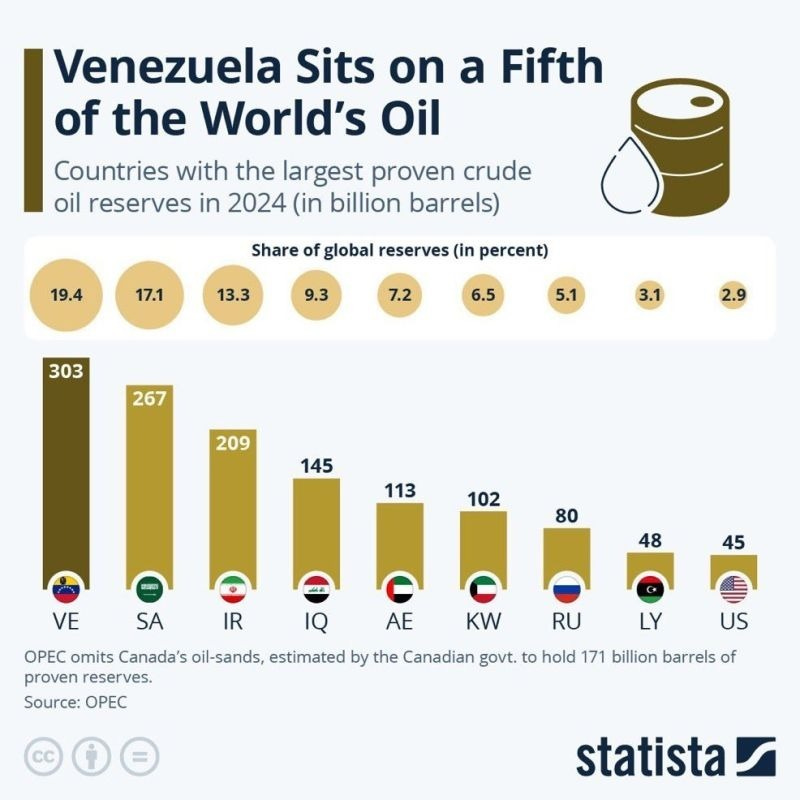
Since removing Maduro, Trump has spoken openly about his intentions to rebuild Venezuela’s oil infrastructure, with the country’s output falling well below its potential - accounting for less than 1% of global oil production.
He has promised that US oil companies will again set up shop in the state, citing plans to recover oil “stolen” from private US companies when Venezuela’s oil assets were nationalised in the ‘70s.
“We built Venezuela’s oil industry with American talent, drive and skill, and the socialist regime stole it from us during those previous administrations. And they stole it through force. This constituted one of the largest thefts of American property in the history of our country,” Trump wrote on Truth Social.
Analysts have refuted that the US has any legal claim to the resource.
Who is Maduro?
Nicolas Maduro has served as the president of Venezuela since 2013, but is not formally recognised as leader by the majority of the international community after a fraudulent election in 2024 - with multiple independent analysis having confirmed that opposition leader Edmundo González won the tallies. A former bus driver and union leader, he first assumed the presidency and leadership of the United Socialist Party of Venezuela following the death of Hugo Chavez, a revolutionary who was elected in 1998, following a failed military coup six years earlier.
While social reforms introduced by Chavez led to temporary improvements in poverty and welfare, funded largely by nationalised oil assets, Maduro’s leadership has been far more troubled. Corruption, the impacts of US sanctions and the collapse of oil prices around 2013 combined to wreaked havoc on the Venezuelan economy, with hyperinflation and food and medicine shortages leading to increased violence and division. While Chavez had his own authoritarian tendencies, these were exacerbated under Maduro as he struggled to live up to his predecessor’s popularity. The new president escalated censorship and oversaw harsh crackdowns against political opponents and protestors, with credible allegations he facilitated grave human rights violations and crimes against humanity.
In the decade since he stepped into the Venezuelan leadership, Maduro is accused of illegally consolidating authoritarian political power in Venezuela through multiple disputed elections, and survived a coup attempt in 2019. He is unpopular domestically, with millions suffering under his oppressive leadership, enduring horrific living conditions and with constant fear of political persecution for speaking up - Human Rights Watch has accused Maduro’s government of facilitating the kidnapping, torture and murder of civilian Venezuelans.
In the face of such dire circumstances, as many as 8 million Venezuelans have fled the country since 2014. Thus, it is not surprising that in the wake of Maduro’s abduction, there have been widely shared scenes of Venezuelan diaspora taking to streets around the world to celebrate. Many have suffered deep personal cost at the hands of this dictator and are rightfully relieved to see him gone.
At the same time, there have been protests held in Venezuela calling for the population to resist US imperialism and take up arms if necessary. This reflects widely held fears amongst the local population that the state will become the next Iraq or Afghanistan - history tells us that US interference in foreign governments rarely bodes well for the local population in the long term. US interests, after all, do not lie in freeing Venezuelans from oppression.
The following offer some differing perspectives from Venezuelans to help paint a fuller picture:
How do Venezuelans feel about Maduro’s capture? Venezuelan journalist weighs in
Venezuelans reflect on Maduro’s removal, grappling with hope and fear
Is the US acting legally?
Regardless of whether the Trump administration’s allegations against Maduro hold ground, the US abduction of Maduro and Flores constitutes an extraordinary breach of international law.
In particular, it shows blatant disregard for Article 2(4) of the United Nations Charter, which states that:
“All members shall refrain in their international relations from the threat or use of force against the territorial integrity or political independence of any state, or in any other manner inconsistent with the purposes of the United Nations.”
Despite this, Western leaders including the UK’s Kier Starmer and Australia’s Anthony Albanese have refrained from accusing the US of a breach, putting out carefully worded statements urging diplomacy and respect for international law.
While the UN Security Council has the power to impose sanctions on countries that breach international law, it would be a fruitless exercise given the US’ veto power.
It’s an ineffective system in which the US has continued to test the limits of its power - with Trump seemingly emboldened to go much further than his predecessors.
The fear now is that the brazen invasion of Venezuela could embolden other countries to carry out illegal operations that fit their own interests.
UN Secretary-General António Guterres was “deeply alarmed” by the escalation, which he said constituted a “dangerous precedent”
UN General Assembly, Annalena Baerbock, added that “a peaceful, safe and just world for everyone is only possible if the rule of law prevails instead of ‘might makes right’”.
What now?
This is a rapidly evolving story, with Donald Trump having warned that the US could launch a second strike on Venezuela if the country’s government does not comply with his. He warned that Interim President Rodríguez could suffer a worse fate than Maduro if she refuses to cooperate with US demands.
Trump has put the broader region on notice, suggesting that the US could also execute similar operations in countries like Colombia or Mexico.
While we can only speculate about what will happen in the short term, regional experts have suggested that forced regime change in Venezuela (beyond breaking international law) could plunge the country into even worse poverty and conditions, giving rise to more violence in the likely event that civilian militias take up arms to resist US intervention.
This will be a story to watch closely.
no mention of US harsh sanctions V Venezuela which have been in place for many years and which have had a catastrophic effect on the people https://urbanwronski.com/2026/01/04/the-venezuela-playbook-how-australian-media-sold-us-another-war/https://urbanwronski.com/2026/01/05/the-medias-role-in-manufacturing-consent-in-us-venezuela-relations/
thank you Kalila for your responsiveness - hard to know I agree what is going but important to understand the US have been prepping for this for many many years ...and well ......oil....... money.... Trump ....xxxx