

Romance no longer exists separately from the internet; it unfolds through algorithms, podcast clips, Instagram DMs and endless streams of “relationship advice” content. In the age of the manosphere, that has real consequences for women’s safety, writes Lia Gordon.
Want to support our work? Cheek is offering 30% off annual subscriptions until June 30, meaning you can get access to ALL of our content for just $49 a year!!
We often talk about the manosphere as though it exists purely online - confined to podcasts and ‘manfluencers’ only. But its influence no longer stops at the internet. The attitudes and ideologies born in these digital spaces have fundamentally altered the emotional atmosphere of modern dating.
What once existed on the fringes of internet culture has become deeply embedded in mainstream online spaces, shaping how many young men understand intimacy, masculinity, consent and power and how it plays in real-life dating scenarios. From TikTok clips about “high-value men” to podcasts framing women as manipulative, shallow or transactional, misogynistic rhetoric is increasingly influencing real-world relationships.
Modern dating in this context has not only become frustrating and emotionally exhausting for women - it is increasingly hostile and dangerous too.

Beneath the thinly-veiled self-improvement advice and edgy hot takes, the manosphere is reframing control, domination and emotional detachment as legitimate forms of masculinity. In online spaces where women are discussed as manipulative, inferior or inherently adversarial, resentment becomes ideology.
When those ideas are consumed at scale by young men, they do not remain confined to podcasts, TikToks or forums; they are shaping the way people approach relationships offline. Conversations around “body counts,” submission, masculine hierarchy and “high value women” are no longer niche internet rhetoric. They increasingly appear in ordinary interactions - whether on dating apps, during first dates, or further along in a relationship.
On the apps, bios referencing “traditional values”, or preferences for a “submissive woman”, read like coded internet rhetoric. Even rejection has become increasingly politicised, with some women experiencing hostile responses after politely declining attention - fuelled by online narratives that frame women as manipulative, shallow or inherently deceptive.
Once-fringe phrases like “alpha,” “beta,” “low value,” or “female nature” are appearing in everyday conversations as young people increasingly speak about relationships in transactional terms: asking what someone “brings to the table”, whether they are “worth investing in”, or what they can “offer” romantically.
What makes this shift particularly unsettling is how normalised it has become. Online misogyny no longer announces itself through overt extremism alone. Instead, it often arrives disguised as dating advice, wellness content, masculinity coaching or “dark humour”. Algorithms reward outrage and emotional reaction, pushing increasingly extreme content toward young men under the guise of confidence-building or self-development.
A growing number of women report that they are disengaging from dating altogether - not because they have lost interest in love, but because the process increasingly feels emotionally unsafe. Romance now exists alongside conversations about coercive control, gendered violence and online radicalisation. The stakes feel vastly different. Red flags are no longer “he wears Dior Savage” - it’s now “he follows Jordan Peterson”, “he asked about my body count on the first date”, or “he made a joke about women belonging in the kitchen”.
Women are approaching dating with heightened vigilance. Dating apps and modern dating culture have transformed romance into a constant process of assessment. Women are increasingly scanning for ideological signals early on, not just compatibility. A throwaway comment about “body counts,” “submission,” or “feminine energy” can be enough to trigger deeper questioning about how someone sees gender, consent, and power.
In Australia, this trend is unfolding against the background of a worsening domestic violence crisis, whereby the number of family and domestic violence offences rose by 8 per cent in 2024-2025. Thirty Australian women have already been lost to violence in the first five months of 2026, according to Sherele Moody’s Femicide Watch. In this context, a bad date no longer just risks awkwardness or disappointment. Many women have real and valid fears of emotional manipulation, coercion, intimidation and physical danger.
The manosphere does not exist separately from these realities. UN Women have noted that manosphere content has normalised violence towards women and girls, both emotional or physical. There have even been reports where manosphere content is teaching men to manipulate women into sex, ignoring boundaries, and reframing consent as something that can be negotiated through persistence or strategy.
Modern dating has always involved uncertainty, but women are no longer just screening for compatibility. We are screening for misogyny. For signs of emotional volatility. For hostility disguised as humour. For indicators that someone’s worldview has been shaped by online spaces that fundamentally oppose women’s rights. For signs that the next person you go on a date with could be a perpetrator. That constant hyper-vigilance creates exhaustion.
In 2026, we have moved well beyond the question of how the manosphere is shaping modern dating - the impacts are already plain to see. What we really should be questioning is how much damage needs to be done for us to stop treating it as a niche corner of the internet and start taking real action.
About the Author
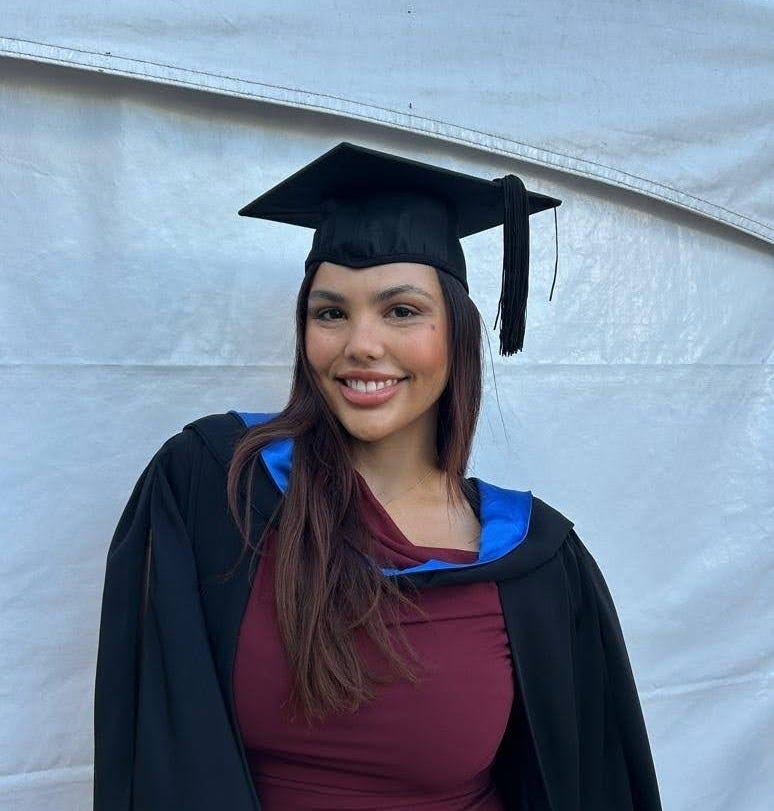
Lia Gordon is a recent graduate of the Australian National University, where she completed a double degree in International Security Studies (Peace and Conflict) and Arts (Criminology and Anthropology) on scholarships. She previously wrote for the ANU Observer and is passionate about journalism and storytelling. As an Indigenous Australian, Portuguese and Indian woman, she is passionate about bringing attention to issues surrounding gender equality, culture, and inequalities, and ensuring these conversations translate into meaningful change. She is particularly interested in pursuing journalism that sits at the intersection of research, politics, and social justice. She also writes independently on Substack.
 | A guest post by
|